New Inner Balance Features

New Audio Guides Tab

To help you get more out of your Inner Balance Trainer, we’ve added a new tab  at the bottom of your Inner Balance screen.
Enjoy these new guides:

  • Welcome to Inner Balance
  • Inner Balance App Overview
  • Quick Coherence Technique
  • Reducing Stress
  • Upgrading Mediation
  • Getting a Better Night’s Sleep
  • Heart-Lock In Technique with Music

Backgrounding Functionality

Now, when using your Inner Balance Bluetooth Sensor*, you can switch to other applications without interrupting your session. Here are a few ways you can enjoy this new backgrounding feature while practicing coherence on your Inner Balance:

  • Play or change music from your favorite music app.
  • Make or answer a phone call.
  • Send or respond to a text message.
  • Open up a text editor to take notes of your insights.
  • Add an action item to your to-do list.

* Please note that this new backgrounding feature only works with the Inner Balance Bluetooth sensor.


Inner Peace through Inner Ease

“We can never obtain peace in the outer world until we make peace with ourselves.”

— Dalai Lama

We hope to find peace in our lives when challenged by the trials that come our way. We seek to reach agreements for lasting peace between people and nations. We desire peace for ourselves and between all people and all nations.

There are many helpful suggestions and paths for creating peace. More people are realizing that peace is first an “inside job.” At HeartMath, we have found that creating inner peace often starts with practicing what we call “inner ease”. HeartMath founder Doc Childre developed a science-based “Inner Ease” technique to help people experience living more from a state of ease.

Inner peace or inner ease is not something we try to find – it’s something we learn to create.

Moving through your day in a state of ease generates an energetic field of ease and flow that radiates from your heart, which also helps to make other’s lives easier.

Below is the simple Inner-Ease technique to try for yourself and you can also read Doc’s inspiring article: “Moving in a State of Ease” excerpted from the book Heart Intelligence.

Download Excerpt

Inner-Ease Technique

  1. If you are stressed, acknowledge your feelings as soon as you sense that you are out of sync or engaged in common stressors – feelings such as frustration, impatience, anxiety, overload, anger, being judgmental, mentally gridlocked, etc.
  2. Take a short time-out and do Heart-Focused Breathing: Breathe a little slower than usual; pretend you are breathing through your heart or chest area.
  3. During the Heart-Focused Breathing, imagine with each breath that you are drawing in a feeling of inner-ease and infusing your mental and emotional nature with balance and self-care from your heart.
  4. When the stressful feelings have calmed, affirm with a heartfelt commitment that you want to anchor and maintain the state of ease as you re-engage in your projects, challenges or daily interactions. Reboot when needed.

Benefits and practical applications of Inner Ease

  • Start your day by doing the Inner Ease steps, along with the commitment to breathe an attitude of inner-ease when convenient throughout the day. This helps to integrate the benefits of your “Inner Ease” practice into your normal routine and interactions.
  • As you proceed through the day, “Inner Ease” helps to prevent the mind’s impatience and distractions from overriding the intuitive whispers of your higher choices and directions.
  • Acting from a place of inner ease is a “heart intelligent” skill that creates more effective management and distribution of personal energy. Personal energy economy is becoming a top priority in today’s emotional climate.
  • Inner ease reduces regrets and energy drain from non-effective decisions.
  • While you are in the flow of inner ease, you travel the straightest line toward the manifestation of your intentions.

At HeartMath, we practice this technique and remind each other as needed to “go to ease” or “breathe ease” during the workday. Our sincere heart’s desire is that every individual, group and organization learns to move with more ease and peace. The peace and ease we experience within are our greatest hope for peace without.


Read Doc’s inspiring article: “Moving in a State of Ease” excerpted from the book Heart Intelligence.

Download Excerpt

Raising our Vibratory Rate to Create World Peace

Many people are wondering if humanity can ever find common ground and peace. They see polarizing beliefs and actions inciting violence. Yet, they also see thousands of people putting aside differences to work together in unity when events beyond human control occur. Whether watching in shared awe and gratitude as the total eclipse moved across the USA, or compassionately helping strangers during the catastrophic floods in Texas, Nepal and India, the earthquakes in Mexico and hurricane damage in the Atlantic, there are many examples where the heart is valued more than our differences.

As the International Day of Peace approaches on September 21, it is becoming clearer to more people that putting the heart first and working together with kindness, compassion and acceptance are the missing pieces for getting along. As we open our hearts and care, we raise our individual and collective consciousness vibration, which creates the potential for drawing in solutions for peace.

Part of being human means that from time to time, we will feel lower-level vibrations, such as being frustrated, angry, judgmental, or revengeful. But if we let these lower vibration feelings run our life, they create separation and eventually polarization. We can raise our vibratory rate with feelings like love, care, compassion, kindness, gratitude and forgiveness. As more people consciously raise their vibration by practicing these heart qualities, it inspires even more people to do the same. These higher vibrational heart qualities are especially contagious, once we integrate them as a way of life.

Together we can open our hearts and co-create an effective peaceful momentum for getting along with each other. This is a necessary step to free up our collective creativity for coherent solutions and intuitive guidance to manifest a world we can all thrive in, while respecting our differences. Peace is an after-glow from increasing our heart directed choices. Now is an appropriate time for the practice of love, kindness and acceptance to hit the street running.

Care Focus: Raising our Individual and Collective Vibration

1. Center in the heart for a couple of minutes and breathe in the feelings of love, kindness and gratitude to raise your vibration. This increases the effectiveness of your transmission.

2. Now envision an increasing momentum of peaceful cooperation as individuals and communities take responsibility for co-creating a “reality-lift” through increasing their love, kindness and compassion for each other and all humanity.

3. Let’s hold the vision of leaders cooperating to achieve peaceful resolutions to wars and crisis potentials and to the famines affecting millions in war-torn countries.

4. Next let’s radiate love, care and compassion to all the people suffering hardships from floods, fires, famine, terrorism, earthquakes, displacement and other global stressors, as your heart directs you.


Adapted with permission. Originally published by the HeartMath Institute for the Global Coherence Initiative Care Focus.

Saying Goodbye to Insomnia: A Father & Son Success Story

Peter shares his story about his father below. Being extremely concerned for his father’s well-being, he insisted his father give HeartMath® a try.

“My father began having terrible bouts with insomnia. He would sleep 1-2 hours a night, sometimes not at all, and it became evident that he was in a cycle that I had once been in — a cycle of stress leading to insomnia leading to depression leading to more stress, and of course more insomnia.

When my father came to me with his insomnia problem he had already developed high blood pressure from the stress and was taking medication for it. The doctors had given him a leading prescription sleep sedative and a host of other unsavory prescription drugs to help him get to sleep. At one point he was taking more than one sedative a night and still not sleeping.

I had mentioned the emWave2® to him multiple times, but he was skeptical and labeled it a ‘holistic’ approach. The issue persisted for months with my dad going back to the hospital multiple times a week for sleep studies, blood tests, MRI’s — the whole medical nine yards. Nothing was working.

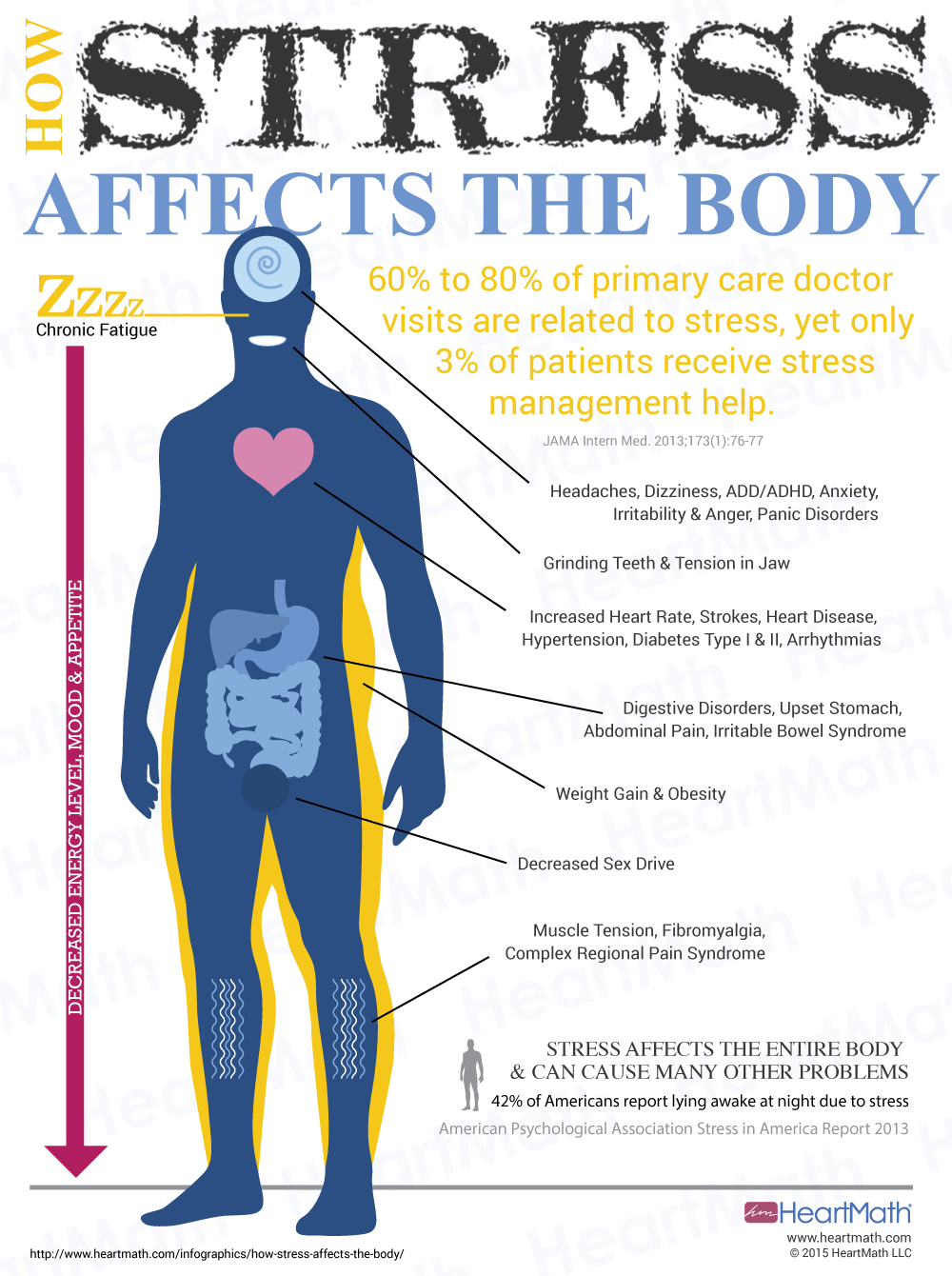
My family and I became tremendously worried, my father was 67 years old, and his health was waning rapidly. His blood pressure issue was only getting worse. He became disillusioned with the treatment options he was being given, but I implored him one night and showed him the HeartMath diagram that outlines stress and explains how coherence training works.

He purchased an emWave that night and began his HRV training. Two weeks later, he had reduced the amount of sedatives he was taking back down to one a night. Two months later, he was cutting them in half. I visited him earlier this week and I’m happy to say his blood pressure has normalized, and he’s completely independent of this sedative and working with his health professional has been able to stop all the other prescriptions he had been taking.

The only variable that had changed was the emWave. I’d like to give my warmest thanks to HeartMath for this. Your work gave my father back his life, and has made me a better person.

I try to tell people about HRV training with the emWave whenever I can because it has had such a profound impact on my life and the lives of my family members. I feel as though this technology could literally reshape the world if more people knew about it.”

-Peter Martinez

Finding Your Calm through Challenges

If there are two heart attributes to consider rebooting right now they would be compassion and tolerance – for our self as much as others. Many people are feeling their emotions running high making the topic of resilience even more important. Staying tuned to what emotions drain us and which ones help sustain our resilience is essential.

Increasing Resilience by Managing Emotions

We know it’s impractical to try to tune out all that is occurring in the world around us or avoid everyday encounters that may not always be pleasant to us. We can, however, learn to increase our resilience so we flow more smoothly through challenges and sustain our positive creative intentions.

Resilience is often defined as the capacity to prepare for, recover from and adapt in the face of stress, adversity, trauma or challenge. Increasing our resilience also plays a highly effective role in strengthening our mental capacity, emotional stability and our health. It especially increases the personal energy needed for adjusting to change and uncertainty in the fast-moving scenes of life today.

Having a high level of resilience is important; not only for bouncing back, but for preventing unnecessary stress accumulation from frustration, impatience, anxiety, decision pressure and such.

HeartMath has verified through its research, involving thousands of participants, that increasing and maintaining our resilience is highly dependent on our ability to manage emotions. Emotions are the principal drivers of a number of key physiological processes involved in energy regulation.

Moreover, while not dwelling on negative emotions is important, also learning techniques for replacing stress-producing emotions with positive, supportive ones can be a critical component to improving overall well-being. Practicing the following suggestion often produces immediate results, even the first time and within a few minutes.

A Suggestion for Replacing Stressful Emotions and Feelings

Take a few minutes several times a day to do this simple process.

  • Identify the emotion or attitude you want to replace.
  • Think of a positive feeling or emotion to replace the unwanted feeling.
  • As you breathe, imagine you are breathing in the positive replacement emotion. Imagine you are breathing in through your heart area. Do this for a while to lock in the new feeling or attitude and repeat this later if needed. Being genuine is key for effective results.

With a little practice, you will surprise yourself with your heart’s power to change many unwanted feelings, emotions and attitudes.

If you would like a deeper understanding of resilience, you might find HeartMath’s new book, Heart Intelligence helpful.

Practical Intuition – More than Just a Hunch

Intuition was once considered a mysterious gift bestowed on only a few. More recently, scientists are recognizing it as a skill that anyone can develop.

Most of us have had some experience with what we call a hunch, a heart feeling, gut feeling or just a sense of “inner knowing” in making decisions in business, or having a strong sense about something with our children or someone we care about, or even in everyday activities like an inner prompting to drive defensively.

At the center of this intuitive ability is the human heart. Once thought to be no more than a pump, the heart is now being recognized as a sophisticated intelligence whose power is only beginning to be scientifically understood.

Surprising new research is showing that the human heart is involved in accessing what is called non-local intuition. This research reveals that the heart receives intuitive information before the brain by a second or slightly more, according to published research conducted by the HeartMath Institute.

This unconscious perception can be seen in subtle changes in our emotions and body. For example, changes in our heart’s rhythm can occur with an intuitive feeling.

While the degree of access to the heart’s intuition varies from person to person, we all have access to it – and this intelligence can be cultivated.

Practical intuition is something we can use daily for moment-to-moment choices and decisions in life; in helping increase our sensitivity and care towards others – and in deepening our connections with ourselves and those we care about.

Researchers have found a significant relationship between increased heart rhythm coherence and becoming more sensitive to our intuitive signals. As we slow down our minds and attune to our deeper heart feelings, our natural intuitive connection begins to flow.

Listening to our intuitive signals unfolds more understanding of ourselves, others, and issues in life. This practical intuition is something we can access daily for making more effective choices and decisions.

10 Traits of Emotionally Resilient People

If specific types of challenges tend to “undo” you, or you often feel frustrated, impatient or drained, there may be some gaps in your resilience strategies. Learning and developing the traits of emotionally resilient people is a great way to even out your reactions and consistently take a more balanced approach to life.

#1 – They practice the art of care and self-care. 

They have discovered what their personal needs are and they provide for themselves. They have taken the time to discover and incorporate whatever it is that makes them feel cared for; creating a baseline and individual strategy.

#2 – They understand that stressful situations don’t define them.

They have relegated circumstances to their rightful place: as short-term conditions that have no power or influence over whom they are in the moment or who they will be when the situation has changed.

#3 – They are compassionate.

They know that everyone deserves respect, good will and love ― including others who may not be handling situations or circumstances in ways they would prefer. Judgment and condemnation do not contribute to nurturing resilience.

#4 – They know life isn’t perfect and they’ve learned to practice acceptance.

T Instead of resisting what is happening, even if it’s not their preference, they accept circumstances they can’t change and expect that things will get better.

#5 – They know when to ask for help.

We’re taught to be self-reliant and independent with our problem-solving and much of the time this approach is entirely appropriate. Yet sometimes the best way to the downhill side of a challenge is to enlist the help of friends, family or colleagues. Resilient people have learned discernment in making this choice.

#6 – They know when to listen, when it’s time to be supportive, and when to allow space.

These are also judgment calls. Holding the awareness that there is a right time and circumstance for each of these strategies is the first step to learning which one is applicable in any given situation.

#7 – They have positive supportive circles.

Making a conscious choice to interact with people who are willing and able to offer the support they need is vital in building resilience. Negativity and criticism drain resources and impact the ability to put things in perspective.

#8 – They know who to go to for honest advice and who’s more likely to add drama to a situation.

 Loving or caring for someone doesn’t necessarily mean that person will provide the guidance you need. Each person has their own strengths, so taking relevant personality traits into consideration before asking for advice is important.

#9 – They are self-aware and often engage in practices that provide self-reflection.

The adage of “know thy self” is important in building and living with resilience. It can often make the difference between feeling confidence about the ability to handle adversity and feeling hopeless or overwhelmed.

#10 – They are grateful.

They often have a gratitude practice that they do daily ― such as keeping a gratitude journal. Gratitude broadens perceptions about life and helps to increase feelings of hope and openness towards new possibilities.

It’s common to have developed several of these traits, yet have little experience or comfort with others on the list. Zero in on which areas you feel can assist you in boosting your reservoir of resilience. You’ll find it’s worth the effort and focus so you can achieve the results you are looking for.

Experience the Difference

Imagine being able to turn a bad day around or recover more quickly from an aggravating piece of news or a heated discussion.

Breakthrough research has found that we can intentionally change our emotional state to find inner balance and a feeling of ease which increases our resilience and allows us to bounce back more quickly from daily stressors.

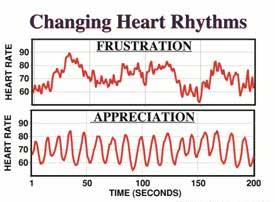
The emotional state of inner balance is marked by a smooth heart rhythm pattern, called a coherent waveform.

With just a few minutes of daily practice with the Inner Balance™ Bluetooth sensor and app, you can watch your heart rhythm pattern become more coherent and feel the difference in your emotional balance, mental clarity and much more.

Inner Balance
EXPERIENCE THE DIFFERENCE

Using the Inner Balance app has numerous benefits such as:

  • Release and prevent overwhelm
  • Shift stress-producing emotional states
  • Experienceinner stillness
  • Enhance mental clarity
  • Access intuition for making better choices
  • Improve performance
  • Increase energy and resilience
  • Sleep better

I Choose Happiness

Happiness can range from a bubbly and buoyant feeling to a quiet and appreciative feeling and there are other variations of what one might call happiness.

One of the most important things we can do that supports our happiness is to build our self-awareness about what we are choosing to focus on? Is it the depleting thoughts such as pessimism or frustration? Can we give more focus and energy towards renewing emotions such as appreciation?

It’s worth noting that having a negative or depleting thought isn’t bad, and it would be idealistic to think we can rid ourselves of every draining thought. Yet as we build more awareness of where our thoughts go we also increase our opportunity to make more conscious choices about where we want to spend our energy. It takes a little practice but it’s well worth it as we start to increase the ratios of happiness that we feel.

Two simple practices that can help foster happiness

Practice building appreciation by writing it and saying it. Do it for your own health and happiness and for those around you. Having ways to exercise appreciation daily helps to support happiness by emphasizing the positive things in our life and it benefits our health by helping to reduce stress and feelings of overwhelm.

  1. Tried and true, this daily practice is simple and worth the minimal time it takes. Pick a quiet time to write down two things for which you are grateful. Keep it in a journal so you can add to it regularly and it’s helpful to look back on it for a little added motivation. Some days will be easier than others, but even on a bad day, we can usually note something we are grateful for (e.g., It’s a new day and a fresh start; the clouds were extra fluffy and pretty today.)
  2. Take gratitude a step further and make a regular practice to verbally express it more readily. Openly expressing our appreciation helps to expand this positive energy. It also helps us to increase our view of what is good in our life — and it uplifts others at the same time.

3 Ways To Enrich the Holiday Experience

It’s the holiday season and many of us are thinking about gifts that will be meaningful representations of our love and appreciation for the people in our lives. Gifts come in many forms, from things we give to experiences we share, to deeper connections with others.

Gifts can also be ways we care for ourselves. In the spirit of giving gifts, we offer these simple suggestions of gifts that we can each give to our self.

While they are acts of self-care – they’re also ways we can make the holiday season a little brighter.

#1 – The Gift of Change A unique holiday gift that will reap rewards now and help start a new year on the right footing is to replace something old with something new – inside our self. This can be making a forward moving commitment in doing something we have been inspired to do but haven’t yet done or changing an old habit that no longer serves us.

We can do this by asking our heart intuition to make us aware of an emotional habit, pattern or behavior that we would like to change. Here are some examples of old habits worth considering: putting off medical check-ups; negative self-talk; being too impatient, forgoing exercise, not getting enough sleep or any other habit that doesn’t support our overall wellbeing.

Once decided on what pattern we want to change; then write it down.

It’s important to not just notice these old attitudes, thoughts or habits but to also replace them. Having a replacement ready helps create a new pattern – one that supports us in a healthier, heart-centered way of living.

Write down the new replacement intention— such as replacing impatience with more patience. Bypass the stress by easing into your replacement. Approach it with the attitude of a fun experiment, not a struggle match. This can make a notable difference in your approach while making it much easier to succeed.

#2 – The Gift of Pause The holiday season often brings added busyness on top of our already full plate of responsibilities. To help reduce the frazzle, let’s give our self the gift of pause.

Here’s how we can do this. Commit to taking a few quiet moments to get calm and centered before holiday events and gatherings. Consider doing it each day as well. Making this part of a personal morning routine can increase our inner calm and brightness throughout the holidays. (Maybe it’ll become a healthy habit or ritual for the new year too!)

Use HeartMath’s Quick Coherence® Technique to get centered. This technique is also great for helping to put things in a proper perspective should situations or circumstances start to feel overwhelming or chaotic. If something catches us off guard and our feelings are disturbed, we can find a quiet place and use this technique to quickly regain our composure.

#3 The Gift of Choice Just like we choose the right outfit for any occasion, we can also choose the appropriate attitude for an event or gathering.

We can first use the gift of pause to tune in and ask what heart-attitude would be best for this event or gathering. Once we have the best attitude in our heart and mind, we can choose to focus on it and carry it with us.

The best attitude could be as simple as committing to deeper listening or practicing non-judgment or expressing more kindness, etc. To make a more genuine connection, we find it helpful to be more interested in how another person is doing than telling our story. During an event, maintaining the attitude of gratitude and appreciation adds a lift to the environment and interactions. Tune in to what is the most fitting for each event or gathering and its unique circumstances and choose that. See what happens.

These simple practices can be gifts to ourselves and others that add to our holiday experience by helping us stay more balanced and connected with who we truly are, and more deeply connected with the real meaning of the season.