The Difference Between Care and Overcare

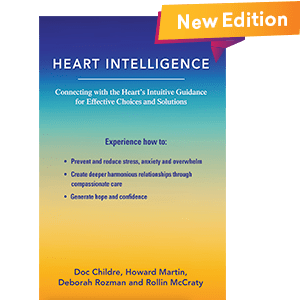
Excerpted from Heart Intelligence: Connecting with the Heart’s Intuitive Guidance for Effective Choices and Solutions; Chapter 8 The Difference Between Care and Overcare
By Doc Childre

Download Ebook Sample

10 HeartMath Practices

Download the Introduction by Doc Childre and Chapter 1 from the new edition of Heart Intelligence: Connecting with the Heart’s Intuitive Guidance for Effective Choices and Solutions.

Free Download

As we spiritually mature into our higher potentials, increased care comes with it. Caring more is a most valid way for love to be stepped down into practical applications. This would solve and prevent many problems that we unconsciously create and repeat.

For the next few paragraphs, I’ll comment on the difference between care and overcare. Overcare is when our initial feelings of care about something or someone turn into obsessive worry, anxiety, or projecting the worst—this usually escalates into emotional depletion and the obvious stress load that follows. Our care is one of our highest assets, but when our care turns into overcare, it drains our energy and our health bears the consequences. Managing our care nurtures us and others, while overcare hinders our effectiveness with energy-draining mind loops even when our intentions are well-meaning.

Download Ebook Sample

10 HeartMath Practices

Download the Introduction by Doc Childre and Chapter 1 from the new edition of Heart Intelligence: Connecting with the Heart’s Intuitive Guidance for Effective Choices and Solutions.

Free Download

We know that numerous caregivers experience a high rate of energetic burnout from not being able to manage the energies of their care. That’s understandable because managing our care has a predictable learning curve and it’s not an easy task for people who care deeply. It’s part of an emotional maturing process in learning the economy of balanced care.

Below are some typical areas where overcare can overwhelm us at times, lowering our vibration while draining our energy:

  • Work
  • Relationships
  • Money
  • Diet
  • Children
  • Parents
  • Health
  • Past regrets
  • How we look
  • How we feel
  • Future security
  • How we will come out
  • Feeling lack
  • Comparisons
  • What people think of us (and what we privately think of them)
  • Learning new technology

Many issues on the list are often draining our energy at the same time, reducing our resilience and our capacity to feel good, while compromising our health and vitality. Then we wonder why we don’t feel like our full-blown self. A stealthy ingredient in overcare is its seductive power to justify itself, while leaving us blindsided to its energy-sapping consequences. With practice, we can cue up our intuition to alert us when overcare begins to invade our feelings and perceptions. The practice of identifying and deleting overcare can save a pivotal amount of energy and health risk along the way.

Eliminating overcare does not reduce our care; it strengthens the effectiveness of our care by bringing it into balance and coherent alignment with our heart. Any time our outgoing energy is balanced, we are smarter on our feet. View overcare (unmanaged care) as a thriving emotional virus, hidden by society’s unconscious agreement that overcare is not accountable. With our heart’s intuitive guidance and commitment, we can free ourselves from the seductive stress that overcare and constant worry bring us.

An excessive (obsessive) amount of overcare and emotional turbulence can unconsciously stream from trying to navigate the learning curve of new software, computers, smartphones, or other “must-have” devices. Yes, they are helpful, but that doesn’t expunge the cumulative stress deficits accrued from the anxiety of having to keep up with it all, especially if you don’t have a knack for it. A balancing gesture would be to occasionally do a reality check and ask: Are we consumers of our technology or are we consumed by our technology? Are we the programmers of our gadgets or are we pawns of our gadgets? When addiction creeps in, we become the pawns and the gadgets become our master. Finding balance in all things is a heart-intelligent practice in these accelerated times, especially when technology is fixing to explode into science fiction-type potentials. Have fun but stay in charge, or you become the pawn. There’s no gray, you know.

Distinguishing Care vs. Overcare

At first, trying to distinguish the difference between balanced care and overcare can seem complicated. This is because when we are in overcare, we can tend to feel that’s when we are caring the most. Many issues we start to care about morph into worry. Excessive worry is a classic example of when overcare is fooling us into thinking that it’s effective care. In our heart, most of us know that free-to-roam worry eventuates into personal energy deficits and compromises our well-being. (If we truly believed that excessive worry really helped us, we would encourage our friends and children to go find a corner and worry each time life’s challenges come up.)

You may ask how can people not go into worry and anxiety over some things or situations that put others or themselves in harm’s way? There are serious things that happen in life that amp up our concern—but most overcare energy drain is about things and issues that often don’t even matter that much. Yet we’re addicted to the habit or drama of overcare. These are especially the situations where managing our care would be effective. Overcare is a deeply imprinted human tendency that’s handed down through each generation. It’s like a virus that can only be cured through self-adjustment.

Others can’t do it for us. There’s no vaccine; however, we don’t need one, because overcare is nothing that we can’t handle with a little conscious focus along with our heart’s commitment to practice. Observe yourself for a few days and see how often you can catch overcare occupying your mind and feelings regarding yourself, others, or issues. When you find yourself in worry, anxiety, or distress from overcare try the following exercise.

Overcare Exercise

  1. While breathing in a relaxed pace, pretend you are breathing through your heart or chest area and imagine calming your mind and emotions with your breath. (Calm emotions help to create a space that enables intuitive access for clearer discernment and choices when evaluating situations.)
  2. Once you’ve calmed your mental and emotional vibrations, then commit to repeating this breathing exercise whenever you find yourself fading back into overcare. Sometimes after a few rounds of doing this, you’ll find your energies more balanced and easier to manage.
  3. As you practice, don’t be concerned if it doesn’t work every time. It won’t. (You’ll get plenty more chances.) Being genuine strengthens the power of your heart’s intention.

Approach this exercise with ease, not force. With practice, you will become more conscious of when you are overcaring, and often you can just stop it on the spot and bring your energy back to balance. Practice increases the strength for actualizing intentions that otherwise fizzle before they land. Heart energy added to any practice brings fortitude and resilience into our intentions, especially when our commitments start to shrink.

This simple exercise is not just for overcare and worry; it’s helpful for any stressful challenge or situation that calls for clearer discernment without the emotional override. Remember that worry is one of the highest contributors to overcare because it seems so “legal“ and normal. I’ve found that understanding and managing overcare is one of the most forward-moving steps we can take in our personal transformation process.

Compassion: The Need of the Times

Excerpted from Heart Intelligence: Connecting with the Heart’s Intuitive Guidance for Effective Choices and Solutions

CHAPTER 9 COMPASSION: THE NEED OF THE TIMES
Written by Doc Childre and read by Deborah Rozman. 

Download Audiobook Chapter

10 HeartMath Practices

Download the mp3 audio file of Chapter 9 from the new edition of Heart Intelligence: Connecting with the Heart’s Intuitive Guidance for Effective Choices and Solutions. Written by Doc Childre and Read by Deborah Rozman.

Free Download

Compassion increases in effectiveness as we mature in practicing the core qualities of the heart, such as unconditional love, allowance, acceptance, and an unattached desire for the highest outcome for all concerned. Cultivating these heart qualities strengthens our compassion and frees it to serve the highest best. True compassion benefits the sender and receiver, though we can’t always see the ways it nurtures and heals or makes it easier to adjust to tougher situations we experience.

Often when small kids are distressed, unhappy, or experiencing a tantrum, we instinctively redirect their energy by giving them a toy or loving attention, and almost instantly they can totally change their frequency pitch (vibration) to calmness, joy, elation, or contentment (higher pitch emotions). A primary reason that young children often transform compressive emotions quickly is because in their early years of development they are still connected to the higher frequencies of their natural heart attributes, such as uncomplicated love, transparency, lack of prejudice, and their superpower to release and move on. Their minds are not yet entrained to the countless lower vibration societal mindsets and habits that often overshadow their heart’s higher feelings and choices.

Many of us have felt drained and stressed on occasion from what we thought was giving compassion. This energy drain and depletion can be triggered especially from unbalanced empathetic care. Empathy can produce strong feelings of care but often comes with tentacles that create over-attachment to what we care about.

Download Audiobook Chapter

10 HeartMath Practices

Download the mp3 audio file of Chapter 9 from the new edition of Heart Intelligence: Connecting with the Heart’s Intuitive Guidance for Effective Choices and Solutions. Written by Doc Childre and Read by Deborah Rozman.

Free Download

Compassion is one of the highest supportive energies of love. I used to think it was for fixing others. We can support each other with our love and compassion, but people have to do their own fixing from within. I was a dedicated “Mr. Fix-all” until I learned that people have to make their own adjustments or else challenges keep repeating—sometimes in different arrangements, and sometimes in much harder circumstances. Often the problems we rush to fix for others are their growth opportunities for learning to connect more deeply within their own heart and soul for direction and solutions.

Learning to balance our empathetic interactions is a big step towards understanding the tone of true compassion. Compassion is an unconditional love that supports the highest outcome for others without depleting our personal reservoir of energy. Whereas unmanaged empathy, sympathetic attachment, and “tired-care” are the rocks to look behind when we feel drained from extending what we felt was our heart’s compassion. One reason that compassion is misunderstood is that for ages, people have used the term “compassion” as a convenient cover-all word for what is often sympathy, empathy, pity, or excessive worry. More people are being prompted from within to gain a deeper understanding of compassion, since compassion tops the list of what would benefit humanity most in these transitional times. Compassion is a powerful core frequency within our heart, but in most cases it takes practice to feel love and care for people in extreme stress without becoming overly-identified with their challenges (a learning curve for all of us). One expression of true compassion is when we can hold love and light for others in dark moments, without draining our own battery and joining them in the dark.

More about Empathy 

Since compassion is so often confused with empathy, I feel it could be helpful to restate a few points that set these two expressions of care apart. As mentioned earlier, sensitivity to other’s pain points often triggers feelings of compassion and empathetic care; however, the effectiveness of our care diminishes rapidly when we over-attach mentally and emotionally to their issues. Empathy can sense the suffering of others yet can be managed to maintain balance and energetic composure within its care. 

News stories, children’s challenges, other people’s health issues, etc. can elicit our empathetic responses which, without management, can trigger a continuous drain throughout our whole system even if we feel like we are “kind of in charge.” Empathy starts out as an asset, yet it can become a source of misery if we don’t find our balance with it. A reality moment is when we realize (not just intellectually, but really get it) that unmanaged empathy can produce continuous energy deficits that far outweigh the “good” we think we are providing to others. Unnecessary aging comes with this quandary.

The following is a standard outcome that most of us have read about or experienced from unmanaged empathy:

On the edge of burnout, we end up livid with ourselves for sinking too deep into others’ challenges, or the world’s problems, and then we get angry because there’s nobody to blame but ourselves (though we give it a good try). It gets worse as we remember that we learned our lesson the last time this happened—and here we are again. This is often followed by self-judgment and self-reduction until we get too worn down to even do that. Then we stressfully regather ourselves over a period of time and start all over with new self-care commitments, feeling like we’ve really learned our lesson this time…. 

We can change the ending to these stories of self- generated ambushes by paying more attention to intuitive feelings that signal us when our empathetic care becomes unbalanced from over-attachment and self-depletion. Our heart’s intuitive feelings often provide warnings before self-depletion sets in, but we can often fall short on taking action because we think over-emotional identity to what we care about is justified. At times our mind is good at diverting us from our heart’s wiser suggestions.

Like many others, my heart intuition was blocked by my mind’s misinterpretation of empathy. I thought living on the edge of burnout from serving others was virtuous and noble. I felt it was proof of my self-sacrifice “to share the light and spread the good” like a little knight. (Picture a knight in shining ignorance on a mission to fix everyone, whatever the personal cost—that was me at age twenty five.) Much of that experience was from young-buck ego vanity, mixed with sincere, yet unbalanced empathetic care. I’ve moved on since then after learning the same lesson, repeatedly. But I still closely monitor the difference between empathy and balanced care. It stays high on my personal list of self-care maintenance practices.

Remember, empathy itself is not the source of energy drains; it’s the unintentional mishandling of empathy that drains and taxes our well-being. Our hearts have the capacity to maintain energetic detachment and emotional equability, but this requires a little genuine practice to instate. It’s one of the most valuable gifts we can give ourselves. Balanced empathy can nurture and serve others without serving us up with it. Learning the difference between lower empathetic attachment and balanced care can help dissolve most of the problems around empathy—and help us mature in the understanding of true compassion and its effectiveness. This practice may be helpful in balancing empathy:

Practice watching some recorded movie scenes where the characters are experiencing a medium amount of physical or emotional pain that creates a challenging sympathetic or empathetic feeling in you. As you watch, breathe in a relaxed way and practice detaching yourself from the emotional over-identification.

If you do this enough times you will eventually find a place within yourself where you can regulate your feelings. You will start to realize that you can actually genuinely care about what is going on without it pulling you into it. 

The advantage of watching the scenes several times in a row is that it gives you more chances to experiment with finding that inner switch which regulates your emotional output. Practicing with movie scenes gives you a jump start on learning dispassion and intentional composure, which help with learning true compassion. These types of practices are often used by first responders to learn to maintain emotional composure as they respond to car wrecks, catastrophes, and such. This skill can be developed. Know in your heart that maintaining your emotional composure, without suffering with people in distress, doesn’t mean that you care less for them. Your care and compassion are actually more effective. 

Compassionate Latitude 

Compassionate latitude is a heart quality that realizes most people are doing the best they can based on their stress overload, anxiety, and the strained thinking so many are experiencing these days. Latitude is the consideration and understanding that we all fall short at times in our choices, words, or actions, especially when enduring stress from challenges that others aren’t aware of. Compassionate latitude increases patience and encourages a deeper understanding of another’s situation. 

Practicing compassionate latitude with each other quickly begins to reduce and prevent stress build-up from stored anger, judgments, and resentments. This is so important for maintaining balance and resilience during pressing times of change and unpredictability. It’s time to skip the drama, reduce judgments and resentments, and move on. Here’s an exercise that can help. 

Compassionate Latitude Exercise 

  1. Start with quiet breathing while radiating feelings of care for someone or something you appreciate. This helps to shift your energy from the mind to your heart.
  2. Next, ponder situations where you could give others more compassionate latitude (e.g. at home, at work, and especially while sorting out miscommu- nications, etc.)
  3. As you breathe, imagine yourself reducing judgments, infuriated responses, and lack of tolerance with compassionate latitude (e.g. attitudes of deeper care, kindness, patience, understanding, and tolerance). Practicing several days in a row helps to anchor this valuable habit.

Another helpful exercise is each day find situations where you can replace judgments and reactions with compassionate latitude.

More on Self-Compassion 

Self-compassion is an advanced step in anyone’s personal empowerment and self-care practices. At first people tend to respond awkwardly when it’s suggested they feel compassion for themselves—it can seem a little self-serving, out of place, undeserved, unspiritual, etc. These attitudes come from handed-down entrainment from old belief systems that don’t serve us anymore. Self-compassion has been on the back burner too long, and now it’s time to seize the moment and take advantage of its transformational benefits. To have compassion for yourself is not an act of selfishness; it’s an act of intelligence, heart intelligence.

Don’t confuse self-compassion with pity-party-type emotions; it’s a transformative vibration from our heart that nurtures us with nonjudgmental acceptance and a deeper understanding of our self. Practicing this form of self-care is especially helpful when transitioning through situations that require time for healing and emotional adjustment. If we have physical or emotional challenges, self-compassion intuitively guides and supports us through the best ways to handle our issues or situations. However, self-compassion is not just for challenging times as it could seem. It’s a regenerative energy that serves as a tonic for our cells and our operating system.

Self-compassion is a higher-vibrational frequency sourced from the love and power of our heart and spirit. We obviously think compassion is beneficial or else we wouldn’t automatically gush it out to others, pets, or suffering around the world, etc. Why wouldn’t we do this for ourselves? See self-compassion as a powerful self-maintenance type of care. This process gets easier once you understand it is just another self-care practice, like putting salve on a sore arm. Here’s an exercise you can try:

Self-Compassion Exercise 

  1. To Practice Self-compassion,simply get quiet somewhere and imagine creating an inner spa.
  2. Imagine breathing self-compassion and positive energy into your mental/emotional nature and into your physical cells. Most importantly, do this from the heart as it connects directly with the healing and renewing qualities from your spirit.

Self-compassion takes a little practice, but today’s transitional times call for these types of practices because of compassion’s restorative benefits to our mental, emotional, and physical nature.

………………. 

Compassion is a most powerful and intelligent frequency within the love spectrum. As we unconditionally express compassion, it intuitively chooses its own way to administer its care based on a sensitive attunement to the higher need of the whole. Pure compassion is not tethered to our agendas; it’s free to weave its magic, sometimes visibly yet often unseen, but never wasted as it nurtures all within its radiance. True compassion supports the highest-best outcome, which is not always what our personality would choose or understand. Unconditional love sets the tone for true compassion. As our human intelligence spirals to the next station of enlightenment,

then collective compassion will become the foundational vibration for amplifying the connection with our soul and source as they stream love and healing through our human experience. Compassion is transformational love and care manifesting in the most ripened state of effectiveness for the whole. 

Doc Childre

A Heart Meditation for the Holidays: Creating New Hope

A Heart Meditation for the Holidays
Creating New Hope

Focus on your heart and breathe in the feeling of love or appreciation that you have for someone or something you care about.

Radiate the feelings of genuine care and compassion into the global energetic field. See people throughout the world exploring the benefits of forgiveness, kindness, and harmonious cooperation.

See more people opening their hearts to the need for compassionate latitude in their interactions. Know that most people are trying to do the best they can during these times of accelerated stress.

As we practice heart qualities like compassion, kindness, and cooperation, we become architects of a new sense of hope and the power to create a better world.

This increases the hope for people getting along with each other and creating solutions together for the benefit of all.

With gratitude,
The HeartMath® Family

How to Increase Heart Coherence

Heart coherence is a naturally occurring state, yet for most, it often comes and goes depending on life situations.

Our research shows we can intentionally learn to increase heart coherence, and we have found that one of the most effective ways to facilitate this is with HeartMath’s coherence-building technology.

The HeartMath tech guides you to heart coherence. It measures your coherence level in real time by analyzing your heart rate variability, HRV for short, and displaying your heart rhythm pattern.

It’s exciting to see how your thoughts and emotions can affect your heart rhythms. When practicing techniques that increase heart coherence, the visual validation using the tech is both empowering and motivational.

This unique experience is incredibly valuable, as it trains you to better know what coherence feels like, what increases it, and what may reduce it.

Based on years of scientific research, HeartMath was the first to make HRV technology available to the public, and has remained the gold standard in HRV Technology and coherence training.

Getting into heart coherence while using the technology for five minutes or more each day can help to reduce and prevent the negative effects of stress in pressured decisions, choices, and interactions.

People report feeling more centered, composed, and calm from a carryover effect.

After being in a coherent state for even a few minutes, there are several versions of HeartMath tech to choose from to suit your personal and professional needs.

Using this innovative technology along with practicing simple heart-focused techniques will allow you to experience the many benefits mentally, emotionally, and physically that increased heart coherence can provide.

Learn More

Practical Intuition

Excerpted from Heart Intelligence: Connecting with the Heart’s Intuitive Guidance for Effective Choices and Solutions; Chapter 4 The Intuitive Heart — — by Rollin McCraty

“From my own experience and my observation of others,I realized that the lack of alignment between what our mind says and what our intuitive heart is quietly trying to tell us can be one of the biggest unrecognized sources of stress…With practice, accessing intuition can become integrated into the choices and decisions of our daily lives.”

Rollin McCraty, Heart Intelligence: Connecting with the Heart’s Intuitive Guidance for Effective Choices and Solutions

Download Ebook Sample

10 HeartMath Practices

Download the Introduction by Doc Childre and Chapter 1 from the new edition of Heart Intelligence: Connecting with the Heart’s Intuitive Guidance for Effective Choices and Solutions.

Free Download

Practical Intuition

Learning how to generate a heart-coherent state to access intuitive intelligence can help prevent many stress- producing scenarios and create a much easier transition and flow through our daily challenges. Practicing heart rhythm coherence a few minutes several times a day helps to attune our mental and emotional nature to the most reasonable and effective way for responding to each situation that life brings us—whether challenging, normal, or creative. Your heart’s intuitive guidance is the voice of who you really are.

Here are some practical ways in which practicing heart coherence to access heart intuition can be very helpful:

  • Making better choices for higher outcomes
  • Increasing your capacity for discerning direction in sensitive situations
  • Deciding when it’s time to speak up or when it’s time to hold back
  • Determining what attitude to bring to a particular situation
  • Detecting when life is saying a change is needed in attitude, disposition, etc.
  • Helping guide diet and health choices

Download Ebook Sample

10 HeartMath Practices

Download the Introduction by Doc Childre and Chapter 1 from the new edition of Heart Intelligence: Connecting with the Heart’s Intuitive Guidance for Effective Choices and Solutions.

Free Download

Accessing intuitive guidance is not one quick trick. Some think it is and that’s why many people get frus- trated with intuition. You have to practice opening and connecting with the heart for intuition to grow within you. Below is the simple Heart Lock-In Technique used in the intuition study to generate a heart-coherent state, which you can practice to build your intuitive connection. Opening your heart, practicing more heart connection with people, and listening from the heart draws in more intuition. Self-compassion, self-forgiveness, and having compassion, forgiveness, and appreciation for others draws in intuition. The heart’s intuition includes care for the wholeness of a situation.

Heart Lock-In® Technique

Step 1. Focus your attention in the area of the heart. Imagine your breath is flowing in and out of your heart or chest area, breathing a little slower and deeper than usual.

Step 2. Activate and sustain a regenerative feeling such as appreciation, care, or compassion.

Step 3. Radiate that renewing feeling to yourself and others.

It has been my experience that accessing my intuition takes managing my emotional energy and learning to pay more attention to my heart’s promptings. Otherwise, the mind and emotions tend to override the heart’s often subtle promptings. As we learn to attune to our heart feelings, our natural intuitive connection can develop and grow. One of the biggest benefits of learning to follow my heart’s promptings has been the ability to bring my mental and emotional faculties into greater alignment with my true self.

Why Heart Coherence Matters

Whether you’re looking for a sense of purpose, increasing your performance, reducing stress or just feeling better, heart coherence can make a measurable difference in your life.

Research has shown that when we are in higher coherence we experience more emotional balance, sharper mental focus, increased resilience and less stressful emotions like anxiety and feeling overwhelmed.

 How might this look in daily life?

Stressful and anxiety-producing situations are part of life, and are often out of our control.

The one thing we can control is our response to whatever comes our way. Taking a minute or two to increase heart coherence allows us to ease anxious thoughts and bring in a feeling of balanced calm. With increased coherence we can respond from our best self.

Many complex decisions require us ­­to weigh out multiple options in order to choose the best direction.

Intentionally increasing our heart coherence improves mental clarity and heightens our intuitive and creative skills. Learning to increase coherence opens the door to the intelligence and discrimination needed when it matters most.

Also increasing heart coherence promotes wholeness healing. For example, a study published in Global Advances in Health and Medicine,  showed that being in a heart-coherent state for a couple of minutes was been found to lower mean blood pressure by an average of 10 points in people with high blood pressure.

Many people also find that getting into heart coherence at the start of prayer, meditation or mindfulness exercises helps them maintain a heartfelt focus that enhances their experience.

In essence, shifting into the state of heart coherence provides important benefits for our mind, body and emotions –helping us  think better, feel better and live better leading to  a new, expanded outlook on life.

The People Not the Fire

Some may remember that in August of 2020, our staff at the California HeartMath headquarters evacuated, along with tens of thousands of others for nearly a month. The little town of Boulder Creek, and neighboring towns in the Santa Cruz Mountains, were suddenly empty and became a featured event in the national news. It all started with a lightning storm that brought an estimated 2,500 strikes overnight, igniting 585 fires, with 2 dozen of those fires merging into one massive blaze called the CZU Lightening Complex Fire. 

The fire destroyed 1,490 homes, businesses and scorched 86,509 acres (over 125 square miles) of forest including our beloved Big Basin State Park. Even so, the fire did not weaken the human spirit and resilience of this small town community. book cover photo of firefightersDaily stories of resilience and courage uplifted us; volunteer firefighters stayed and fought the fire every day for a month, generous people from all over the U.S. helped those in need; even those who lost everything, stepped up to help others and were a powerful reminder that what matters most is each other.

The residents of Boulder Creek share their stories of resilience in a new book titled, The People Not the Fire: Stories of Resilience, which is now on Amazon.com. There are 30 story contributors, including Deborah Rozman, President of HeartMath Inc.

Life altering events like this are happening all around the world, and it’s the stories of human resilience that demonstrate the importance of community and the gift that comes from working together in the name of care, kindness and compassion. 

The energetic shift that is happening around the world demonstrates the importance of community. We’re in this together, and to make a better future we need to work with each other and get along. Being compassionate, caring and kind are more than poetic gestures, these are heart qualities that are essential if we are to create a future that we can all thrive in. 

One final note: out of a deep gratitude from the Boulder Creek community, a portion of the book proceeds will go to the Boulder Creek Volunteer Fire Department. 

Generating Peace Through Global Coherence

Download Ebook Sample

10 HeartMath Practices

Download the Introduction by Doc Childre and Chapter 1 from the new edition of Heart Intelligence: Connecting with the Heart’s Intuitive Guidance for Effective Choices and Solutions.

Free Download

Excerpted from Heart Intelligence: Connecting with the Heart’s Intuitive Guidance for Effective Choices and Solutions; Chapter 12

GLOBAL COHERENCE THE PLANETARY POTENTIAL
by Deborah Rozman

As I was waking one morning and before I opened my eyes, these thoughts flooded into my consciousness: The world needs as much care and compassion as it can get. What if we could collectively put out enough pure radiant love into the earth’s energetic fields that it would create a multiplier effect or a quantum-coherence effect? What will it really take to shift the consciousness of humanity? These thoughts stayed with me through my morning meditation as I radiated as much pure love, care, and compassion to the planet and humanity as I could.

Download Ebook Sample

10 HeartMath Practices

Download the Introduction by Doc Childre and Chapter 1 from the new edition of Heart Intelligence: Connecting with the Heart’s Intuitive Guidance for Effective Choices and Solutions.

Free Download

Science is beginning to acknowledge that we are all part of a vast web of connections that encompass not only life on this planet but the solar system and beyond. It is through this energetic connectivity that information, heart coherence, and resonance are exchanged. Let’s look at how this energetic connectivity could potentially increase global coherence.

There are thousands of groups and organizations all around the world using various forms of meditation or prayer to energetically help make things easier for others. Many organizations conduct synchronized meditations, prayers, intention experiments, and so forth to facilitate healing or to create a more harmonious world. Numerous studies have shown that group or collective meditation, prayer, and focused intention directed towards a specific positive outcome can have increased beneficial and measurable effects.

For example, a study conducted in 1993 in Washington DC, showed a 25 percent drop in crime rate when 2,500 meditators meditated during specific periods of time with that intention, which means that a relatively small group of a few thousand was able to influence a much larger group—a million and a half.[2] 

Every individual’s energy affects the collective field environment. This means each person’s emotions and intentions produce an energy that affects the field. Therefore, a first step in diffusing societal stress in the global field is for each of us to take personal responsibility for our own energies. We can do this by increasing our personal coherence and raising our vibratory rate, which helps us become more conscious of the thoughts, feelings, and attitudes that we are “feeding the field” each day. We have a  choice  in  every  moment  to  “take  to  heart” the importance of intentionally managing our energies. This is the free will or local freedom that can create global cohesion.

Heart coherence practices help to increase our vibratory rate and coherence baseline, so our spirit, heart, brain, and nervous system operate in sync and with increased efficiency. This coherence carryover effect enables us to be more conscious and intuitive at choice points—to move in a state of ease and choose our actions and responses rather than mechanically reacting and creating stress.

Through raising our vibratory rate, we become conscious that our energetic heart is coupled to a deeper part of our self. Many call this their “higher power” or their “higher capacities,” which links us to a non-local quantum field of information and energy which physicist David Bohm called the “implicate order” and “undivided wholeness.” When we are in heart coherence, we have a tighter alignment with the heart intelligence that connects us to that source.

In 2008 the HeartMath Institute launched the Global Coherence Initiative (GCI). GCI is an international cooperative effort to help activate the heart of humanity and facilitate a shift in global consciousness.I am honored to be a member of the Global Coherence Initiative Steering Committee and to contribute to this vision. GCI has three primary focuses. The first is to invite people to participate by actively practicing heart coherence and adding more coherent love, care, and compassion into the planetary field. The second is scientific research on how we are energetically interconnected with each other and the earth; and the third is to educate people on how we can utilize this interconnectivity to more quickly raise our personal and collective vibratory rate to create a better world.

Here is a Heart Coherence technique from GCI to increase and sustain your personal coherence. Here are the six steps of this powerful tool:

  • Breathe and calm yourself in whatever ways you choose.
  • Choose something you appreciate—a person, pet, nature, etc., and radiate the feeling of appreciation to them for about two minutes. This helps open the heart more and increases your effectiveness when you start sending care to the planet or to a situation that needs it.
  • Evoke genuine feelings of compassion and care for the planet.
  • Breathe the feelings of compassion and care going out from your heart. (To help with focus, some imagine their compassion and care flowing out like a river flows out to the sea. Others imagine their compassion and care radiating as a beam of light, or they radiate it out with the rhythm of their breath. Determine what is right for you.)
  • Radiate the genuine feelings of compassion and care to the planet or to a specific area of immediate need.
  • See yourself joining with other caretakers to participate in the healing process and generate peace.

Increasing our individual heart coherence can contribute to a new world of social and global coherence, based on the proven intelligence that getting along with each other is the missing piece in our ability to thrive as a planet and draw solutions for creating a world we all want to live in.

What is Heart Coherence?

A new video explains heart coherence in simple, easy to understand language.

Heart Coherence is a high performance and healthy statephysically, emotionally, mentally and spiritually— that brings out the very best in us.

The term coherence implies harmonious order, connectedness, stability and efficient use of energy.

Coherence can be seen all around us when we observe life through the lens of the heart.  The beauty and intricate balance of nature is a magnificent demonstration of coherence.

Increased coherence happens at times within the human experience too. For example, most of us have had days where everything seemed to flow. We felt good – composed and clear; we were able to adapt quickly to whatever came our way with balance and poise. 

In the 1990’s HeartMath Institute researchers, identified a physiological state called heart coherence —  a type of coherence that occurs when our body’s systems, our breathing, heart rhythms, brain rhythms and hormonal response, are in sync with each other.

They also discovered that heart coherence not only affects physical processes, but also our mental and emotional balance and composure. Their research showed that heart coherence can be self-generated leading to less mental and emotional stress and more inner security and stability. In summary, Heart Coherence is a synchronized and empowering state, physically, emotionally, mentally, spiritually, allowing us to become our best selves.

Helping Children Maintain Their Heart Connection

Excerpted from Heart Intelligence: Connecting with the Heart’s Intuitive Guidance for Effective Choices and Solutions; Chapter 8The Difference Between Care and Overcare

Download Ebook Sample

10 HeartMath Practices

Download the Introduction by Doc Childre and Chapter 1 from the new edition of Heart Intelligence: Connecting with the Heart’s Intuitive Guidance for Effective Choices and Solutions.

Free Download

At the time of this writing, according to a study out of Calgary University, one in five youth are experiencing clinically elevated anxiety symptoms and one in four adolescents globally are experiencing clinically elevated depression.

Often when small kids are distressed, unhappy, or experiencing a tantrum, we instinctively redirect their energy by giving them a toy or loving attention, and almost instantly they can totally change their frequency pitch (vibration) to calmness, joy, elation, or contentment (higher pitch emotions). A primary reason that young children often transform compressive emotions quickly is because in their early years of development they are still connected to the higher frequencies of their natural heart attributes, such as uncomplicated love, transparency, lack of prejudice, and their superpower to release and move on. Their minds are not yet entrained to the countless lower vibration societal mindsets and habits that often overshadow their heart’s higher feelings and choices.

The collective consciousness is slowly awakening to the need to educate children in the difference between their mind and heart and how to maintain their heart connection in their interactions. This usually starts by teaching younger children appreciation, kindness, sharing, compassionate care for others who are sad or feeling low, etc. It’s especially important for young children to learn how to go to their heart space for comfort and guidance when they‘re stressed and emotionally overloaded. Older children can learn to connect with their heart’s intuitive guidance amidst societal stress and society’s hard and fast entrainment to overstimulation, overcare, ambition, competition, and techno-mania.

Download Ebook Sample

10 HeartMath Practices

Download the Introduction by Doc Childre and Chapter 1 from the new edition of Heart Intelligence: Connecting with the Heart’s Intuitive Guidance for Effective Choices and Solutions.

Free Download

One of the biggest obstructions in a child’s development (but not intentional) is when parents assume that they always know best regarding what their kids should be and do as they become adults. Millions of children end up playing out the dreams of their parent’s ideal personifications. To most parents in these situations, it seems normal and motivated by care. It is care—but often care that doesn’t include the sensitivity to the way the child is natured. This unintentionally tries to force-fit a child into molds that don’t fit. Guidance is important, yet guidance occasionally needs an awareness-upgrade that’s more inclusive of the consequences it generates. Most everyone realizes that, for a long time now, children around the world are born with more awareness than previous generations. This increased awareness can cause resistance and separation in teens when they are pressured in directions that their deeper heart feels are not right for them—especially regarding vocation and relationship choices. Updated guidance models are available that can prevent much stress and emotional resistance in children from spirit repression. Guidance needs to include an awareness of their individual nature and their deeper heart’s inclinations and desires. New consciousness regarding this is on the rise, yet there’s much left to be done to change old-school guidance patterns.

With compassion, I encourage parents to be proactive in becoming more informed about effective new models and information regarding child-rearing. Most parents are doing the best they can with the time constraints they have. But it’s time for us all to upgrade our awareness because in our heart of hearts, we want our children and young adults to become who they truly are. Parents also need to have compassion for themselves, as keeping up with children’s accelerated awareness is one of the harder challenges, especially in these times. I compassionately understand the extra commitment this takes. I realize it’s even harder now for adults to stay balanced and sort out their next steps.

Our younger generation’s increasing awareness will eventually help to change society’s conflicting lower-vibrational mindsets that have cost so many lives and generated ongoing hatred, trauma, and retribution. New generations won’t tend to support the intolerance and separation that block harmonious connections and caring interactions among all people. Our younger generation is already finding its way towards becoming more effective in inspiring the need for a global change of heart.