The Science · How HeartMath Works

The answer was in your heart the whole time.

The HeartMath Institute's research reveals how your heart and brain work together — and how your heart holds the key to calming a stressed nervous system.

Start Here

 Your heart is constantly signaling your brain.
 Those signals shape how you think, feel, and respond.

HeartMath has spent over three decades studying heart rhythm patterns (HRV) and the heart-brain connection — research that's been validated again and again, in clinics, hospitals, and everyday life.

80+ peer-reviewed studies 200+ certified practitioners Pioneering HRV research SINCE 1991
Heart → Brain

Your heart sends more signals to your brain than your brain sends to your heart.

 Most people think the brain runs the body. The science says otherwise. Peer-reviewed research shows the heart is constantly informing the brain — shaping attention, emotional processing, memory, and decision-making. 

Also measured across the study

When your heart rhythm is chaotic, your brain reflects it: 

−  Stress

  Reactivity

−  Poor Focus

When your heart rhythm is chaotic, your brain reflects it:

+  Clarity

+ Calm

+ Control


How the heart communicates
nervous system icon

Nervous system

Waves

Hormones

Pulse-icon

Pulse waves

Magnet-icon

Electromagnetic field

 This is why you can't simply "think your way" out of a stress response. 
The signal traffic runs the other direction.

Backed by 80+ peer-reviewed studies — and applied at institutions worldwide.
NASA Stanford Medicine Kaiser Permanente
Heart Rate Variability

HRV: a window into your nervous system.

HRV — heart rate variability — is the tiny variation in time between each heartbeat. Even when your heart feels steady, the gaps between beats are always shifting. And more variation is a good thing: it means your body is adapting well, while less can signal stress. In short, HRV reflects how well you handle stress — and how quickly you recover.

Your Wearable

Measures your HRV.

 If you wear a fitness tracker or smart ring, you can already see your HRV — whether you're recovered or run down. That's genuinely useful. But a reading only tells you where you are. It can't move you somewhere better. 

HeartMath

Trains your HRV.

HeartMath shows your heart rhythm live and gives you a technique to shift it in the moment — then repeats it until your nervous system holds a steadier baseline on its own. Not another number to check. A skill you build.

Coherence & incoherence

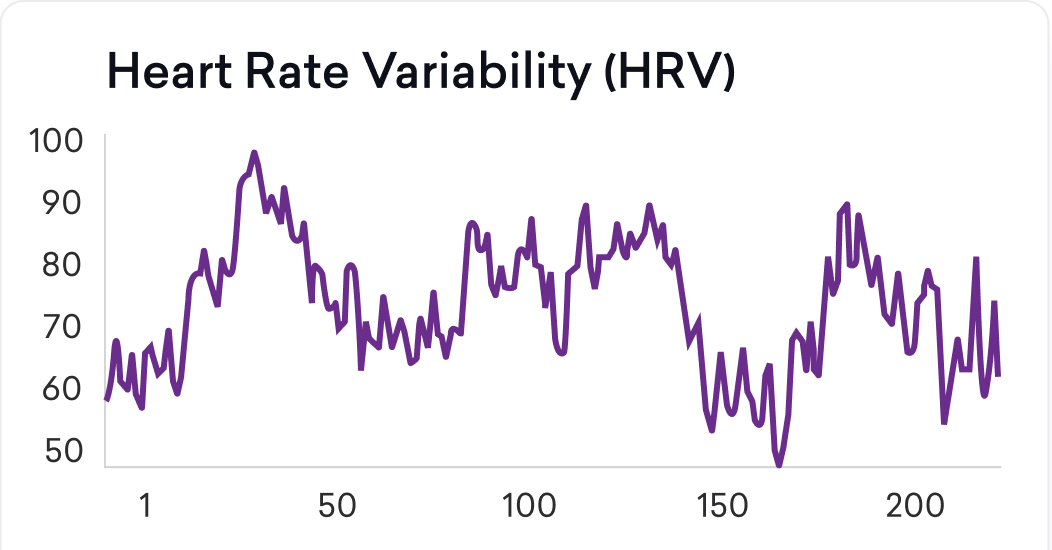
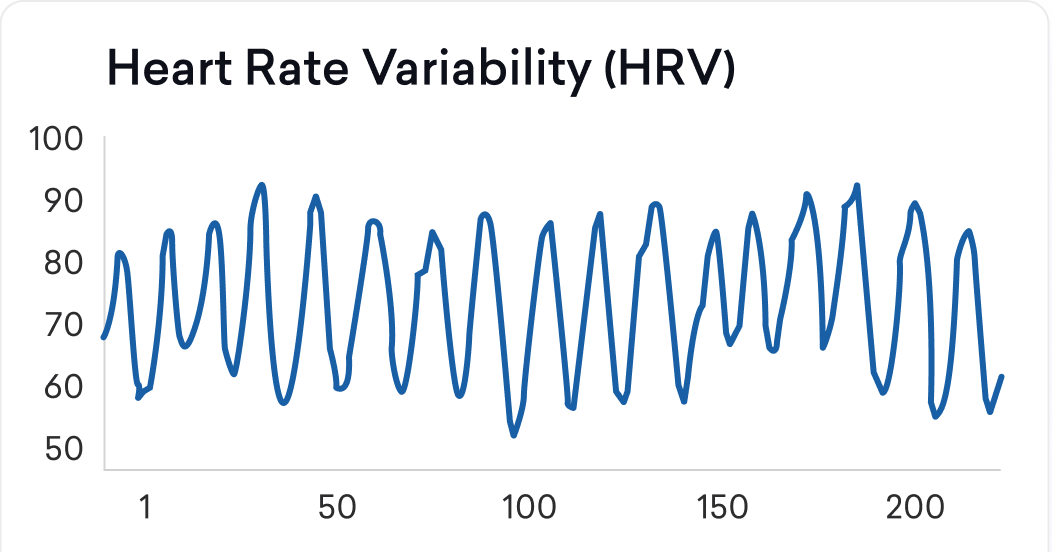
 Two heart rythms.
 Two completely different lives.

 Coherence is a calm, focused state where your heart, mind, and body work together instead of fighting each other — the feeling of being steady, clear, and in control, even under stress. You can see it directly in your heart's rhythm.  

Stressed. Reactive. Drained.

Incoherence — dysregulated

Stressed. Reactive. Drained.

Your system is out of sync — heart, brain, and nervous system working against each other. Energy depletes faster, thinking clouds over, and your ability to handle stress steadily erodes.

  • Anxiety
  • Frustration
  • Overwhelm
  • Anger
Calm. Clear. Resilient

Coherence — regulated

Calm. Clear. Resilient

Your system is synchronized — heart, brain, and body working together. Clearer thinking, steadier emotions, more energy, and greater resilience.

  • Appreciation
  • Care
  • Care
  • Gratitude
  • Calm focus
The secret sauce

Emotion is what drives coherence.

Breathing can start the shift — but it's emotion that drives coherence. Feelings like appreciation, gratitude, and care move your heart into a smooth, steady rhythm and help hold it there. That steady rhythm sends your brain a clear signal of safety and balance, settling your nervous system — and that's what coherence feels like: calm, clear, and in control.

Appreciation-icon

Appreciation

Active recognition

gratitude-icon

Gratitude

Felt thankfulness

care-icon

Care

Compassion for self & others

Outcomes at scale

 14,266 people. 17 years. Real outcomes. 

 Using a validated scientific assessment, HeartMath tracked 14,266 people over 17 years — and measured real improvements in stress, anxiety, sleep, and energy.

2 in 3

saw improvements in anxiety or depression

17%

Lower overall stress

53%

felt more energized daily

40%

improved overall life satisfaction 

Also measured across the study

-15%

Emotional stress
Anger, resentment, and reactivity all fell significantly.

-17%

Sleep problems
Poor sleep and daily fatigue both dropped sharply.

-15%

Physical symptoms
Body aches, muscle tension, and headaches roughly halved.

+7%

 Emotional vitality
More energy, contentment, and inner calm.

These outcomes don't come from tracking stress.
They come from the daily practice of training your nervous system.
The research foundation

 35 years of science, led by the
HeartMath Institute.

 An independent nonprofit, the HeartMath Institute has pioneered research on the heart-brain connection since 1991 — mapping how the heart's rhythm shapes stress, emotion, and the state of coherence. Everything here rests on their peer-reviewed work, which HeartMath translates into the tools and training you use every day. 

80+

peer-reviewed studies

12,000+

certified practitioners worldwide

112

countries using HeartMath

Stanford Medicine • Kaiser Permanente • VA Medical Centers • U.S. Navy SEALs • NASA • Red Cross • Boeing • 40+ MLB teams • Harvard Hospitals
See it in action

 This is what the science looks like in practice.

HeartMath's Inner Balance sensor and app put this research into a few minutes of daily practice. Watch how a session works — start to finish. 

Put the science to work

 Ready to train your nervous system, not just manage it?

 HeartMath's Inner Balance sensor and app put this science into daily practice — real-time biofeedback and guided training, built on 35 years of research.